|
|
 |
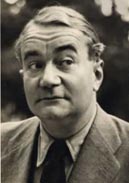
Henry Corbin (14 April 1903 - October 7, 1978) was a philosopher, theologian and professor of Islamic Studies at the Sorbonne in Paris, France.
Corbin was one of the 20th century’s most remarkable and significant religious thinkers. His vision of the fundamental unity of the three great monotheisms, Judaism, Christianity and Islam, is of profound importance for our understanding of the history and destiny of the Western tradition. His work provides an ecumenical and cross-cultural perspective which is unique in its scope, power and visionary penetration.
His works include Avicenna and the Visionary Recital, Creative Imagination in the Sufism of Ibn 'Arabi and Spiritual Body & Celestial Earth.
|
|
|
|
 |
Mouse over this icon to see the abstract of the article. |
• Click on the header on any column to sort.
• Click on an issue listing (e.g. "Vol. 1, No. 1. ( Winter, 1967)" ) to see the full contents of only that issue.
|
| Article |
Corbin’s purpose during this lecture is to demonstrate the significance of traditional philosophy to present-day Iran, and he does so through the theories of several individuals. He primarily uses the writings of Sayyid Haydar Amuli as the “authentic concept of the traditional sciences.” Amuli defines tradition in two ways: as “knowledge acquired from outside” (`ulûm kasbiya) and “knowledge possessed by right of innate heritage” (`ulum irthiya). Redefining tradition in this sense allows the theories of differing metaphysics, such as Suhrawardi and Mulla Sadrâ Shirâzi, to function as the conjunction of philosophical knowledge with spiritual experience that “absolves and frees the past of ancient Iran from its discontinuity in relation to Islamic Iran.”
| The Force of Traditional Philosophy in Iran Today | Corbin, Henry | |
Vol. 2, No. 1. ( Winter, 1968)
| Islam |
|
1 entries
(Displaying results 1 - 1)
|
View : |
|
 |
Loading... |
|
Page:
[1]
of 1 pages
|
|
|
|