| Here is a selected list of key authors that feature in Studies in Comparative Religion or who contributed three or more articles. |
|
‘Abd al-Qadir, Amir
|
Blake, Douglas Halebi
|
Duncan, Alistair
|
Horváth, Róbert
|
Moore, Alvin
|
Poindexter, Wilson Eliot
|
Sherrard, Philip
|
|
Clive-Ross, F.
|
Bolton, R.
|
Eaton, Gai
|
Hultkrantz, Ake
|
Nasr, Seyyed Hossein
|
Pourjavady, Nasrollah
|
Siraj ad-Din, Abu Bakr
|
|
Algar, Hamid
|
Brown, Joseph Epes
|
Fidelis Sapientiae, (pen name)
|
James, John
|
Needleman, Jacob
|
Raine, Kathleen
|
Staveley, Lilian
|
|
Almquist, Kurt
|
Burckhardt, Titus
|
Fitzgerald, Michael Oren
|
Keeble, Brian
|
Northbourne, Lord
|
Reat, Noble Ross
|
Stoddart, William
|
|
Atiyeh, George N.
|
Cahill, P. Joseph
|
Gampopa, Guru
|
Kelly, Bernard
|
Oldmeadow, Harry
|
Rinpoche, Samdhong
|
Talbott, Harold
|
|
Austin, Ralph
|
Coomaraswamy, Ananda K.
|
Gelfand, Michael
|
Lemercier-Quelquejay, Chantal
|
Pallis, Marco
|
Saran, A.K.
|
Vâlsan, Michel
|
|
Awolalu, Joseph Omosade
|
Coomaraswamy, Rama P.
|
Godwin, Joscelyn
|
Lindbom, Tage
|
Panikkar, Raimundo
|
Schaya, Leo
|
Verax, (nom de plume)
|
|
Bando, Shojun
|
Cooper, J.C.
|
Griffiths, Bede
|
Lings, Martin
|
Peregrinus, (nom de plume)
|
Schimmel, Annemarie
|
Villanova, Thomas of
|
|
Bendeck Sotillos, Samuel
|
Corbin, Henry
|
Guénon, René
|
Lipsey, Roger
|
Perry, T.A.
|
Scholem, Gershom G.
|
Wall, Bernard
|
|
Bennigsen, Alexandre
|
Cowan, James
|
Han-Shan, (in Japan: "Kanzan")
|
Macnab, Angus
|
Perry, Catherine
|
Schuon, Frithjof
|
Watson, Ian
|
|
Benoist, Luc
|
Danner, Victor
|
Hani, Jean
|
Mason, Wendy
|
Perry, Clara
|
Seattle, Chief
|
Zaehner, Robert Charles
|
|
Bernadine of Siena, Saint
|
de Borron, Robert
|
Herring, Rev. Ian
|
Michon, Jean-Louis
|
Petitpierre, Francois
|
Seneviratne , Maureen
|
Zolla, Elemire
|
|
Bishop, Donald H.
|
de Jesse, Bruno
|
Hobson, Peter
|
Moore, Peter
|
Pietsch, Roland
| | |
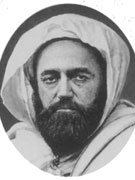 |
Amir ‘Abd al-Qādir al-Jazā’irī (1808-1883), is an important figure in Algerian history. He was a shareef, a descendent of the Prophet Muhammad, and a Berber of the Banu Ifran tribe. Amir ‘Abd al-Qādir (alt. spellings: Emir Abd el-Kader, Emir Abdel Kader) was trained from a young age in Islamic sciences, and he became a scholar with knowledge of both the exoteric and esoteric (i.e. Sufism) dimensions of Islam. His father was a shaykh of the Qadiri Sufi Order. After the invasion of the French colonial power in Algeria in 1830, Amir ‘Abd al-Qādir became the most important leader of the rebellion against the invaders. After years of victories, he was finally captured and exiled to France, and later to Damascus. There, Amir ‘Abd al-Qādir resumed his scholarly pursuits, writing books on theology and philosophy, but always with a mystical bent. Today, he is considered one of the major heroes in ultimately winning Algerian independence, and his spiritual writings are held in considerable esteem.
A poem composed by the Amir ‘Abd al-Qādir, titled “The Life of the Nomad”, appeared in the Spring 1976 issue of Studies.
|
|
For a listing of articles by, or reviews of Amir ‘Abd al-Qadir click here |
|
|
|
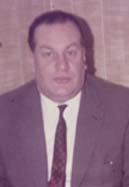 |
F. Clive-Ross. Francis Clive-Ross (1921-1981) was the founder, editor-in-chief and publisher of Studies in Comparative Religion, the earliest and most influential English-language journal of traditional studies. Studies in Comparative Religion was founded in Britain in 1963 and published under the name Tomorrow until 1967, when it was changed to its present name. Four quarterly issues per year, containing over 1,200 articles in total, were published during the first 25 years of Studies in Comparative Religion’s existence, before its publication was interrupted in 1987.
Clive-Ross was also a Trustee of the World of Islam Festival held in London in 1976 and penned a number of editorials and articles.
During its first 25 years, the journal had its offices in a wing of the Clive-Ross home in Pates Manor, Bedfont, which dates its origins to the 15th century. Charles le Gai Eaton wrote about Clive-Ross’s dedication to Studies in Comparative Religion:
It was because he himself believed that such ideas are the most real things in the world that Clive-Ross found the strength to struggle against difficulties (not least those of funding) which might have seemed insuperable to a lesser man. It was his deep conviction that the beliefs, the spiritual “point of view”, expressed in the pages of Studies represented a truth for which the world is hungry that enabled him to fulfill his task up to the end of his life. In this he was single-minded and showed a toughness which contrasted with his amiable and easygoing nature.
|
|
For a listing of articles by, or reviews of F. Clive-Ross click here |
|
|
|
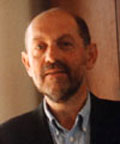 |
Hamid Algar is a British-born scholar, teacher, and writer. He is Professor of Persian and Islamic Studies at the Faculty of Near Eastern Studies, University of California Berkeley, where he has been since 1965. Prof. Algar's areas of expertise include Arabic, Persian and Ottoman Turkish literature, and other aspects of Islamic religion and culture. He focuses his research on Shi‘ism in Iran and Sufism in the Persian and Persian-influenced world. Dr. Algar contributed “Some Notes on the Naqshbandi Tariqat in Bosnia” to the Spring 1977 issue of Studies.
|
|
For a listing of articles by, or reviews of Hamid Algar click here |
|
|
|
|
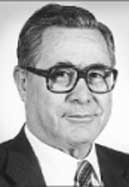 |
Dr. George Atiyeh (1923-2008) was a scholar, librarian, author, and editor who headed the African and Middle Eastern Division of the Library of Congress for more than 25 years. Atiyah graduated from the American University in Beirut in 1950 with an M.A. in history. In 1954 he received a doctorate in the history of philosophy from the University of Chicago. Dr. Atiyeh was a professor and administrator at the University of Puerto Rico for some time, after which he joined the Library of Congress in 1967. As head of the Near East section, Atiyeh contributed greatly to building the Library’s renowned collections on the Middle East. Dr. Atiyeh wrote, edited, and contributed to a number of books on Arab philosophy, Christian-Muslim relations, and Arab intellectual history. Dr. George N. Atiyeh contributed the article “Jerusalem in Medieval Christian Thought”, which appeared in the Summer-Autumn 1979 edition of Studies.
|
|
For a listing of articles by, or reviews of George N. Atiyeh click here |
|
|
|
Ralph Austin is a scholar, author, translator, editor, and educator specializing in Arabic and Islamic Mysticism. He was born in 1938 in Willerby, England, and received degrees in Classical Arabic and Islamic Mysticism (Ph.D.) from the University of London. Starting in 1963, Dr. Austin taught Arabic and Islamic Studies at the School of Oriental Studies at the University of Durham. He retired in 1988. In addition to other publications, Ralph Austin's work on Ibn ‘Arabi is often cited. His 1971 book, Sufis of Andalusia, is a translation of two works of the great Andalusian Sufi shaykh. Dr. Ralph Austin has also been involved in inter-faith conferences and discussions related to mutual understanding between faiths. |
For a listing of articles by, or reviews of Ralph Austin click here |
|
|
|
|
|
|
Alexandre Bennigsen (1913-1988) was a writer, scholar, and educator who focused on the area of Islam in the former Soviet Union. He was born in St Petersburg, but his family left Russia after the Bolshevik Revolution. Bennigsen studied at the Ecole des Langues Orientales in Paris and later taught at the Ecole des Hautes Etudes (en Sciences Sociales). Bennigsen also held academic positiona at some American universities, including the University of Chicago and the University of Wisconsin–Madison. Along with his frequent collaborator, Chantal Lemercier-Quelquejay, Bennigsen contributed the article "Muslim Religious Conservatism and Dissent in the USSR" to the Winter-Spring 1979 issue of Studies. |
For a listing of articles by, or reviews of Alexandre Bennigsen click here |
|
|
|
Luc Benoist (1893-1980) was a French writer, art historian, and museum curator. Benoist originally focused on art and art history. He held several influential posts as curator, including as assistant curator at Versailles and then as curator of the Museum of Fine Arts in Nantes. He wrote a number of books and articles on sculpture and other arts. Then, in 1928, he encountered the work of René Guénon and thereafter began contributing to traditionalist thought. His book The Esoteric Path: An Introduction to the Hermetic Tradition (Sophia Perennis, 2004) is a survey of esoterism within such traditions as Christianity, Hinduism, and Islam, but most of his work remains untranslated into English. Luc Benoist has been called "the most balanced and authentic exponent of Guénon’s teaching…[in whose work] true scholarship is combined so well with conciseness and comprehensiveness."
Luc Benoist's essay “ The Origins of Art
”, which appeared in the Summer-Autumn 1980 issue of Studies, combines his interests in art and the nature of traditional man.
|
For a listing of articles by, or reviews of Luc Benoist click here |
|
|
|
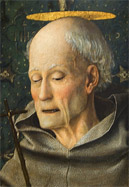 |
Bernardino of Siena (1380-1444), also known as Bernadine, was a priest, a Franciscan missionary, a writer of theological and spiritual works, and a tireless and charismatic preacher who was canonized in 1450. St. Bernadine of Siena was renowned for his devotion to the Holy Name of Jesus. Rama P. Coomaraswamy translated and added an introduction to “A Sermon on the Glorious Name of Jesus Christ” by St. Bernadine of Siena, which appeared in the Winter-Spring 1980 edition of Studies.
|
|
For a listing of articles by, or reviews of Saint Bernadine of Siena click here |
|
|
|
Donald H. Bishop is a scholar, educator, writer, and editor. He is Emeritus Professor of Philosophy at Washington State University. He taught philosophy of religion and comparative religions there for thirty-two years. Besides his contributions to this journal, he also edited Indian Thought: An Introduction ( 1975), Thinkers of the Indian Renaissance (1982, 1993), and Chinese Thought: An Introduction (1985). |
For a listing of articles by, or reviews of Donald Bishop click here |
|
|
|
In his article “The World of the Juki,” (Winter-Spring 1983), Douglas Halebi Blake* indicates that he was brought up in Lebanon or western Syria amongst the nomadic Juki people of that region. The Juki are a people of Gypsy origin. Blake’s article is, in the words of an editor of Studies in Comparative Religion, “one of the most beautiful evocations we have seen of the nomadic spirit.” In it, Douglas Halebi Blake describes in very moving and powerful language the worldview of these vanishing people, mostly through the words of his Uncle Noah (his “patron” and “spiritual mentor”) and other poetically articulate and memorable elders.
-----------------------------
* The author's legal name is “Douglas Blake.” The family surname was changed years ago, but when publishing this article in Studies, and in other published writings, Douglas Blake used the name “Halebi,” which is the family name of his paternal ancestors. |
For a listing of articles by, or reviews of Douglas Blake click here |
|
|
|
Robert Bolton was educated in the sciences, and developed a strong interest in Traditional metaphysics, obtaining from Exeter University the degrees of M.Phil and Ph.D, with a special interest in the areas of free will, and personal identity and the soul. He is the author of three books, The Order of the Ages: World History in the Light of a Universal Cosmogony; Person, Soul and Identity; and The Logic of Spiritual Values. |
For a listing of articles by, or reviews of R. Bolton click here |
|
|
|
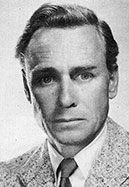 |
The late Joseph Epes Brown was a professor of Religious Studies at the University of Montana. A renowned author in the fields of American Indian traditions and World Religions, Brown was one of the founders of Native American Studies and was largely responsible for bringing the study of these religious traditions into American higher education. His publications include The Sacred Pipe (1953), his famous recounting of the sacred rites of the Oglala Sioux, Animals of the Soul (1992), The Spiritual Legacy of the American Indian (1982) and Teaching Spirits (2001).
Brown received his undergraduate degree at Haverford College, an M.A. from Stanford University and the Ph.D. in Anthropology and History of Religions from the University of Stockholm. His vital interest in the traditional beliefs and values of the American Indian led him to the old Sioux Black Elk, with whom he lived for a year while recording the account of the seven rites of the Oglala Sioux. Black Elk himself requested that the book The Sacred Pipe be written so that the sacred beliefs of his people could be preserved and better understood by both Indians and non-Indians.
|
|
For a listing of articles by, or reviews of Joseph Epes Brown click here |
| For more information about Joseph Epes Brown at www.worldwisdom.com click here |
| For books by Joseph Epes Brown at www.worldwisdom.com click here |
|
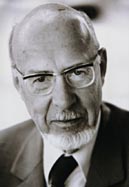 |
Titus Burckhardt, a German Swiss, was born in Florence in 1908 and died in Lausanne in 1984. He devoted all his life to the study and exposition of the different aspects of Wisdom and Tradition.
In the age of modern science and technocracy, Burckhardt was one of the most remarkable exponents of universal truth, in the realm of metaphysics as well as in the realm of cosmology and of traditional art. In a world of existentialism, psychoanalysis, and sociology, he was a major voice of the philosophia perennis, that "wisdom uncreate" that is expressed in Platonism, Vedanta, Sufism, Taoism, and other authentic esoteric or sapiential teachings.
|
|
For a listing of articles by, or reviews of Titus Burckhardt click here |
| For more information about Titus Burckhardt at www.worldwisdom.com click here |
|
|
Religious studies and theology scholar P. Joseph Cahill was a professor and department chair at the University of Alberta's Department of Religious Studies for many years. He was a prominent Canadian Catholic theologian who authored the book Mended Speech: The Crisis of Religious Studies, and was for a time editor-in-chief of the journal Religious Studies and Theology. |
For a listing of articles by, or reviews of P. Joseph Cahill click here |
|
|
|
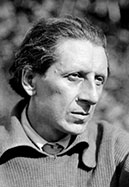 |
Born in 1877 in Ceylon, Ananda Kentish Coomaraswamy was a multi-talented researcher, scientist, linguist, expert on culture and art, philosopher, museum curator, and author. He was the first well-known author of the modern era to expound the importance of traditional arts, culture, and thought as more than simply relics of a bygone past. Dr. Coomaraswamy has often been credited with reintroducing the concept of the "Perennial Philosophy" to a West dazed by the endless multiplicity of the modern world.
Articles from Ananda K. Coomaraswamy coming soon
|
|
For a listing of articles by, or reviews of Ananda Coomaraswamy click here |
| For more information about Ananda Coomaraswamy at www.worldwisdom.com click here |
| For books by Ananda Coomaraswamy at www.worldwisdom.com click here |
|
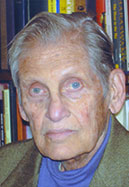 |
Dr. Rama P. Coomaraswamy (1929-2006), son of the renowned perennialist writer Ananda K. Coomaraswamy, was in his own right an important writer on traditionalist topics, especially regarding Christianity and the influx of modernistic ideas and practices in this ancient apostolic tradition.
Rama P. Coomaraswamy received his early education in India in an orthodox Hindu setting. He then spent several years in America, Canada and England where he obtained his Oxford Matriculation. Graduating from Harvard University with a major in Geology, he went on to medical school, graduating in 1959. He spent 30 years as a thoracic and cardiovascular surgeon, holding the position of Assistant Professor of Surgery at Albert Einstein College of Medicine in New York, as well as Chief of Thoracic and Cardiovascular Surgery at Stamford Hospital.
Although raised in the Hindu tradition, after the death of his father, Rama would convert to Catholicism. He was a firm traditionalist and an ardent student of Church history and theology. For five years in his later life he was Professor of Ecclesiastical History at the St. Thomas Aquinas (Lefebrist) Seminary. He also always maintained his interest in traditionalist metaphysics and in traditional art.
Articles by Rama P. Coomaraswamy coming soon
|
|
For a listing of articles by, or reviews of Rama Coomaraswamy click here |
| For more information about Rama Coomaraswamy at www.worldwisdom.com click here |
| For books by Rama Coomaraswamy at www.worldwisdom.com click here |
|
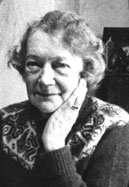 |
Jean C. Cooper (1905-1999) was born in China where she spent much of her childhood. Informed by the perspective of the Perennial Philosophy, she wrote and lectured extensively on the subjects of philosophy, comparative religion, and symbolism. She was the author of lucid introductory works on Chinese religion such as Taoism, the Way of the Mystic (1972), Yin and Yang (1981), and Chinese Alchemy (1984). In addition, she wrote several works in the field of symbolism, including Fairy Tales: Allegories of the Inner Life (1983), Symbolism, the Universal Language (1986), Symbolic and Mythological Animals (1992), and the broad ranging classic in its field, An Illustrated Encyclopedia of Traditional Symbols (1978).
Often writing under the name "J.C. Cooper," she was a regular contributor to Studies in Comparative Religion, penning many book reviews and a few essays, such as “The Symbolism of the Taoist Garden”, which appeared in the Autumn 1977 issue of Studies. An illustrated compilation of three of her books recently appeared under the title An Illustrated Introduction to Taoism: The Wisdom of the Sages (World Wisdom, 2010).
|
|
For a listing of articles by, or reviews of J.C. Cooper click here |
|
|
|
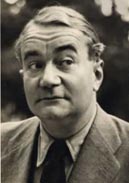 |
Henry Corbin (14 April 1903 - October 7, 1978) was a philosopher, theologian and professor of Islamic Studies at the Sorbonne in Paris, France.
Corbin was one of the 20th century’s most remarkable and significant religious thinkers. His vision of the fundamental unity of the three great monotheisms, Judaism, Christianity and Islam, is of profound importance for our understanding of the history and destiny of the Western tradition. His work provides an ecumenical and cross-cultural perspective which is unique in its scope, power and visionary penetration.
His works include Avicenna and the Visionary Recital, Creative Imagination in the Sufism of Ibn 'Arabi and Spiritual Body & Celestial Earth.
|
|
For a listing of articles by, or reviews of Henry Corbin click here |
|
|
|
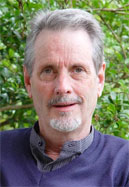 |
James Cowan is an author with a broad range of interests and knowledge. His is particularly noted for his writings on the aboriginal peoples and traditions of Australia. Mysteries of the Dream-time: Spiritual Life of the Australian Aborigines (Prism Press, 1989) and Letters from a Wild State: Rediscovering our True Relationship to Nature (Bell Tower, 1992) are two of Cowan’s books that deal extensively with these aboriginal people and their ways. Cowan’s interests encompass many Traditionalist themes in general. Two of his books on Christian sanctity are Desert Father: A Journey in the Wilderness with Saint Anthony (New Seeds, 2006) and Francis: A Saint's Way (Liguori Publications, 2001). Cowan has also delved into fiction, including his novel A Mapmaker's Dream: The Meditations of Fra Mauro, Cartographer to the Court of Venice (Trafalgar Square, 1997), which won the Australian Literary Society's Gold Medal. James Cowan contributed the essay “Wild Stones: Spiritual Discipline and Psychic Power among Aboriginal Clever Men” to the Winter-Spring 1985 edition of Studies. |
|
For a listing of articles by, or reviews of James Cowan click here |
|
|
|
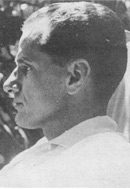 |
Victor Danner (1926-1990) was an educator, scholar, translator, and author. He specialized in, and taught Arabic, Arabic Literature, Islam, Sufism, Eastern Religions, and Comparative Mysticism at Indiana University. Professor Danner was a renowned teacher, with the rare ability to captivate and motivate students, whether the subject was Arabic grammar or American Indian religion. Dr. Danner focused his writing and translating on the explication of the Islamic religious tradition and its esoterism, Sufism. Besides contributing essays to the journal Studies in Comparative Religion, as well as to other journals, he produced three books, Ibn ‘Ata ‘Allah’s Sufi Aphorisms (1973), Ibn ‘Ata ‘Allah: The Book of Wisdom (1978), and The Islamic Tradition: An Introduction (1988).
|
|
For a listing of articles by, or reviews of Victor Danner click here |
|
|
|
Robert de Borron was a writer of French "romances" in verse. He was active in the late 12th and early 13th centuries, with approximate dates of 1170-1212 C.E. De Borron (also spelled "Boron") was evidently from the village of Boron, near Delle, in France. He may have been a cleric or perhaps a knight, though this is not known.
De Borron is noted for his trilogy of romances in verse on Joseph of Arimathea, Merlin, and Perceval, all figures which he connected to the Arthurian legends. A few years earlier, Chrétien de Troyes had written about the Holy Grail, but it was de Borron who developed the theme of the quest for the serving dish used at the Last Supper. He supplied the legend with the symbolism of a spiritual quest and Christianized it in a way that had not previously been done. De Borron suggested that the Grail had held the blood of Christ from the cross, thus making of it a Christian relic. |
For a listing of articles by, or reviews of Robert de Borron click here |
|
|
|
|
Alistair Duncan (1927-2007) was an author, photographer, and advocate of interfaith relations. He had a particular interest in sacred sites of the Middle East and wrote several books about the area, including Land of the Rock, The Noble Sanctuary, and The Noble Heritage. Alistair Duncan became the Director of the The World of Islam Festival Trust, a post he held for some years and in which he participated in the publication of a number of important books. |
For a listing of articles by, or reviews of Alistair Duncan click here |
|
|
|
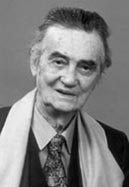 |
Charles le Gai Eaton (1921-2010) was born in Lausanne, Switzerland of British parents. He was educated at Charterhouse and Kings College, Cambridge. After wartime service in the British Intelligence Corps, his professional life included diplomatic service, teaching, and journalism, all of which took him to four continents. His writings challenged many of the operating principles of modern, and thus secular, societies. They do so by contrasting prevalent ideas about human nature with the traditional view of man as pontifex or “God’s viceroy on earth.” Writing on religion, philosophy, politics and society, Eaton maintained that people are always free inwardly to shape their ultimate destinies. In his later years, Gai Eaton worked as a consultant to the Islamic Cultural Center in London.
Although he wrote extensively on Islam, his most famous book was probably King of the Castle: Choice and Responsibility in the Modern World, considered by many to be a classic of the genre.
Charles le Gai Eaton contributed numerous articles to various issues of Studies.
|
|
For a listing of articles by, or reviews of Gai Eaton click here |
|
|
|
|
|
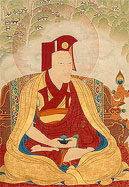 |
Guru Gampopa (1079-1152) was an important Tibetan Buddhist monk, guru, author, and transmitter of several Tibetan Buddhist lineages. Gampopa is generally acknowledged as the greatest disciple of Milarepa. Gampopa was at first a well known physician, following in his father's footsteps, and a husband and father. After the deaths of his immediate family, he became a dedicated disciple of Milarepa, and gained Enlightenment. Guru Gampopa became the "heart son" of Milarepa. It would later be the former's synthesis of Milarepa's meditative techniques and various doctrines of Tibetan Buddhism that would become the basis of the Kagyu tradition in Tibetan Buddhism. Guru Gampopa authored various treatises, and is perhaps best known for the Rosary of Precious Stones, included here in the 1984 Summer-Autumn edition of Studies. As in the representation to the left, he is usually depicted wearing a red hat and robes.
|
|
For a listing of articles by, or reviews of Guru Gampopa click here |
|
|
|
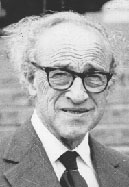 |
Michael Gelfand (1912-1985) was a physician, teacher, university administrator, editor, and author.
Dr. Gelfand was born in Cape Town, South Africa, and worked there, in England, and Rhodesia (now Zimbabwe) as a physician. He co-founded the Central African Journal of Medicine in 1955, and continued to co-edit it for many years. The Order of the Knighthood of Saint Sylvester was conferred upon him by the pope in 1977, a very unusual honor for a devout Jew.
Dr. Gelfand wrote many articles and books on medical topics (his book Tropical Medicine was the accepted authority in this field at one time), but also about the Shona people of Zimbabwe. Michael Gelfand contributed the essay “UNHU—The Personality of the Shona” to the Winter 1970 issue of Studies.
|
|
For a listing of articles by, or reviews of Michael Gelfand click here |
|
|
|
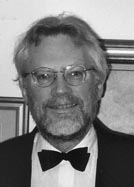 |
Dr. Joscelyn Godwin was born in England and received a B.A. degree and M.A. in Music there. He came to the U.S. in 1966 and received a Ph.D. from Cornell in 1969. Godwin
taught at Cleveland State University for two years and then began a career with the Music Department at Colgate University, where he has been since 1971. Dr. Godwin has written a great deal on music, literature, and Western esoteric traditions, including Hermeticism and alchemy. He has also translated a number of books, though perennialist readers may be most familiar with his translation of Guénon's The Multiple States of Being. Dr. Godwin contributed two essays to this journal.
|
|
For a listing of articles by, or reviews of Joscelyn Godwin click here |
|
|
|
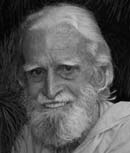 |
Alan Richard "Bede" Griffiths (17 December 1906 – 13 May 1993), also known as Swami Dayananda (Bliss of Compassion), was a British-born Benedictine monk and mystic who lived in ashrams in South India. He was born at Walton-on-Thames, England and studied literature at Oxford University under C. S. Lewis, who became a lifelong friend.
In December, 1932, Griffiths joined the Benedictine monastery of Prinknash Abbey near Gloucester, where he was ordained to the priesthood in 1940. In 1958 he helped establish Kurisumala Ashram (Mountain of the Cross) in India, a Syriac rite monastery in Kerala. In 1968 he moved to Shantivanam (Forest of Peace) Ashram in Tamil Nadu. Griffiths wrote twelve books on Hindu-Christian dialogue. Griffiths' form of Vedanta-inspired Christianity is called Wisdom Christianity.
Articles from Bede Griffith coming soon.
|
|
For a listing of articles by, or reviews of Bede Griffiths click here |
|
|
|
|
Han-Shan ("Kanzan" in Japanese) was a legendary Chinese poet who lived in the 8th or 9th Century. The facts of his life are as elusive as the figure himself. He wrote hundreds of poems in Chinese during the Tang Dynasty, and his themes are considered primarily in the Taoist and Chan traditions. Han-Shan He is considered by many in the Zen tradition to be an incarnation of the Bodhisattva Manjushri. The poems of Han-Shan utilize scenes from the natural world, as do these three translated here by Peter Hobson, with images of mountains, mists, and clouds setting the scene for observations on the nature of the spirit of man.
|
For a listing of articles by, or reviews of (in Japan: "Kanzan") Han-Shan click here |
|
|
|
Jean Hani is a Professor Emeritus at the University of Amiens in France, where he has specialized in Greek literature and philosophy. He has written several books including Le Symbolisme du temple chrétien, Mythes, rites et symbols: Les Chemins de l'invisible and La Vierge noire et le mystère marial.
Articles by Jean Hani coming soon |
For a listing of articles by, or reviews of Jean Hani click here |
|
|
|
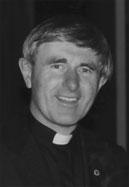 |
Father Ian Herring was an Anglo-Catholic clergyman in Victoria, Australia. At the time of his death in 1993, Rev. Herring was Vicar of Christ Church Essendon in Melbourne Australia. Fr. Ian Herring wrote the essay “The Dove and the Crow,” which appeared in the Summer-Autumn 1984 edition of Studies. At the time of publication, the essay was incorrectly attributed to Ananda K. Coomaraswamy. In the following issue (i.e. Winter-Spring 1985, vol. 17), the editors apologized for the error, and quoted from a letter sent to Studies by Father Herring: “When I opened my Studies and saw ‘The Dove and the Crow’ in print, I felt a combination of emotions. First, I was delighted that a work of mine had been considered worthy to appear in a journal with Schuon, Guénon and company. Secondly, I was flattered that somebody thought it was worthy of Coomaraswamy. In truth, I remember writing it under his spell, and may well have used his thoughts. The confusion is not surprising. It was clearly a mistake made in good faith.…”.
|
|
For a listing of articles by, or reviews of Rev. Ian Herring click here |
|
|
|
J. Peter Hobson was a British author, scholar, translator, and student of many languages whose central interest was the truth within the world's religious traditions. Hobson's translating projects included Titus Burckhardt's Art of Islam and several works originally in Chinese, including “The Three-Character Rhymed Classic on the Ka‘bah (the Cube of Heaven)” in the Summer-Autumn 1980 edition of Studies and “Three Short Poems” by Hanshan in the Spring 1977 edition.
|
For a listing of articles by, or reviews of Peter Hobson click here |
|
|
|
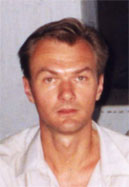 |
Róbert Horváth is a Hungarian writer who has authored a number of pieces on traditionalist/perennialist subjects. Those that have been translated into English include a detailed and in-depth review of the controversial book Against the Modern World, by Mark Sedwick (Oxford University Press, 2004). Click here to read Horváth's review of Sedgwick's book.
One article by Horvath that is available on the internet may be of particular interest to Studies readers:
Other links of interest:
- For a chronological bibliography of writings by Róbert Horváth (mostly in Hungarian), click here.
- For further information about Róbert Horváth on Wikipedia (in Hungarian), click here.
- For a thematic listing of Horváth's work (also mostly in Hungarian), click here.
|
|
For a listing of articles by, or reviews of Róbert Horváth click here |
|
|
|
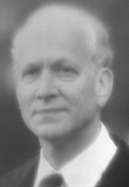 |
Dr. Âke Hultkrantz was recognized as a major authority on Native American religions and shamanism. He was a professor of religion at the University of Stockholm, Sweden. During the years 1948 and 1958, Professor Hultrkrantz conducted field work at the Wind River reservation, which resulted in his ground-breaking book, Native American Religions of North America: The Power of Visions and Fertility. His other works include The Religions of the American Indians, Shamanic Healing & Ritual Drama: Health & Medicine in the Native North American Religious Traditions, and Belief and Worship in Native America.
Articles from Ake Hultkrantz coming soon.
|
|
For a listing of articles by, or reviews of Ake Hultkrantz click here |
| For more information about Ake Hultkrantz at www.worldwisdom.com click here |
|
|
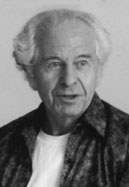 |
John James, OAM, is an Australian architect, builder, farmer, author, and medieval historian. He is a world authority on Chartres cathedral. Dr. John James is currently producing a comprehensive nine-volumne thesaurus on early Gothic architecture in France entitled The Creation of Gothic Architecture an Illustrated Thesaurus: The Ark of God. John James has been awarded the Order of Australia Medal and the American Institute of Architect’s Honor for Collaborative Achievement for his research on Gothic architecture.
|
|
For a listing of articles by, or reviews of John James click here |
|
|
|
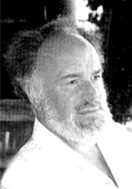 |
Brian Keeble is a British scholar, educator, editor, and author. His best known book is probably Art: For Whom and For What?, but he has more recently authored God and Work: Aspects of Art and Tradition (World Wisdom, 2009). Keeble is the founder of Golgonooza Press and co-founder of Temenos Academy. The latter is sponsored by The Prince's Foundation of HRH The Prince of Wales, and is a teaching organization dedicated to the same central idea that had inspired the earlier Temenos Review. Brian Keeble contributed “Tradition, Intelligence and the Artist
” to the Autumn 1977 issue of Studies.
|
|
For a listing of articles by, or reviews of Brian Keeble click here |
|
|
|
Born in 1921, Bernard Kelly, an English Catholic Traditionalist author and thinker, contributed to Religion of the Heart, edited by Seyyed Hossein Nasr and William Stoddart. He also wrote Lay Spirituality: Its Theory and Practice and An Introduction to Moral Theology: Fundamental Concepts in Their Christian Perspective. |
For a listing of articles by, or reviews of Bernard Kelly click here |
|
|
|
Chantal Lemercier-Quelquejay was a frequent collaborator of the late scholar and author Alexandre Bennigsen (1913-1988). Together, they wrote a number of articles and books on the topic of Islam, and particularly Sufism, in the former Soviet Union. Their article "Muslim Religious Conservatism and Dissent in the USSR" appeared in the Winter-Spring 1979 issue of Studies. |
For a listing of articles by, or reviews of Chantal Lemercier-Quelquejay click here |
|
|
|
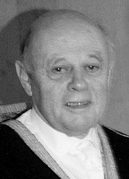 |
Tage Lindbom was born in Sweden in 1909. He was one of the intellectual architects of the Swedish welfare state, but later in his life adopted more conservative political views. Having completed a doctorate in History at the University of Stockholm in 1938, he was for many years director of the Labor Movement Archives and Library, housed in the headquarters of the Swedish Labor Movement in Stockholm. Close to the very center of decision-making, Lindbom helped conceive and implement “the Swedish model.” He was the friend of prime ministers, cabinet ministers, and labor leaders. He served on public boards and commissions dealing with cultural questions, including the executive board of the Royal Opera.
After World War II, Lindbom started to have serious doubts about the cause he promoted. He underwent a slow, but profound intellectual and spiritual change. In 1962 he published The Windmills of Sancho Panza a book that rejected the assumptions behind Social Democracy and related movements. He found himself suddenly isolated. After breaking with his past, Lindbom published many books in Sweden, most of which explore the tension between religion and modern secular ideology. He became probably the most prominent Swedish traditionalist/perennialist author of the twentieth century. Two of his books have appeared in English. The first was The Tares and the Good Grain (1983) and the second was The Myth of Democracy (1996). Lindbom died in 2001.
|
|
For a listing of articles by, or reviews of Tage Lindbom click here |
| For more information about Tage Lindbom at www.worldwisdom.com click here |
|
|
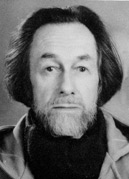 |
Martin Lings was an author, editor, translator, and specialist in Islamic art and esoterism. From 1970-74 he was Keeper of Oriental Manuscripts and Printed Books at the British Museum (in 1973 his Department became part of the British Library) where he had been in special charge of the Qur’an manuscripts, amongst other treasures, since 1955. His authoritative biography of the Prophet Muhammad, Muhammad: His Life Based on the Earliest Sources, has become a classic and is widely read in both East and West as an unbiased, clear, and profound source on the prophet of Islam.
|
|
For a listing of articles by, or reviews of Martin Lings click here |
| For more information about Martin Lings at www.worldwisdom.com click here |
|
|
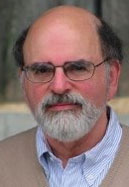 |
Roger Lipsey is an art historian, editor and author. Dr. Lipsey has written on a wide range of topics and intellectual figures, but his greatest contributions to the body of perennialist literature are undoubtedly the three volumes he edited of the works of Ananda K. Coomaraswamy (Coomaraswamy, Bollingen series, Princeton University Press, c. 1977). Lipsey has been called the "leading authority on the life and work of Coomaraswamy" as a result of this monumental task. As an author, his most recent books have been Angelic Mistakes: The Art of Thomas Merton, and Have You Been to Delphi?: Tales of the Ancient Oracle for Modern Minds.
As a leading authority on A. K. Coomaraswamy, Dr. Lipsey has contributed the "Introduction" to Figures of Speech or Figures of Thought? The Traditional View of Art: Revised Edition with Previously Unpublished Author's Notes by Coomaraswamy, edited by William Wroth (World Wisdom, 2007).
Dr. Roger Lipsey contributed “The Two Selves: Coomaraswamy as Man and Metaphysician” to the Autumn 1972 issue of Studies. |
For a listing of articles by, or reviews of Roger Lipsey click here |
|
|
|
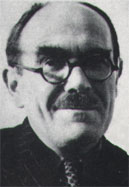 |
Angus Macnab was born in London of New Zealand-Scots parents. He received a classical education at the ancient "Public School" of Rugby and at Christ Church College, Oxford. He was a gifted translator of Latin and Greek poetry, but as a profession he chose teaching. Mr. Macnab’s interest in Spain began in 1936, and after the Second World War, in which he served as a volunteer ambulance driver, he learned Spanish and decided to make Spain his home. In 1938, under the influence of G.K Chesterton and Hilaire Belloc, Angus Macnab embraced neo-scholasticism and traditional Catholicism. For some this could have been an intellectual straitjacket, but in conjunction with his classical roots and his later oriental studies, it provided Macnab with a fine philosophical tool for a subtle examination of the two traditional cultures (Christian and Islamic) of Medieval Spain. The fruits of his investigation in this field were his books Spain under the Crescent Moon and Toledo, Sacred and Profane.
|
|
For a listing of articles by, or reviews of Angus Macnab click here |
| For more information about Angus Macnab at www.worldwisdom.com click here |
|
|
|
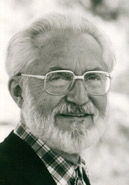 |
Jean-Louis Michon is a traditionalist French scholar who specializes in Islam in North Africa, Islamic art, and Sufism. His works include Le Soufi marrocain Ahmad Ibn 'Ajiba and L'Autobiographie (Fahrasa) du Soufi marrocain Ahmad Ibn 'Ajiba (1747-1809). For 8 years he was the Chief Technical Advisor to the Moroccan government on Unesco/UNDP projects for the preservation of the cultural heritage. Dr. Michon coordinated the rehabilitation of traditional handicrafts that were seriously threatened by industrialization and other factors. To preserve Morocco's monuments, sites, museum collections, living folk arts and traditions, he set up an inventorization and classification of the assets of its cultural heritage. Furthermore, he was instrumental in preserving and restoring the ancient casbahs (castles) of Morocco in a project designed to safeguard the ancient city of Fez.
|
|
For a listing of articles by, or reviews of Jean-Louis Michon click here |
| For more information about Jean-Louis Michon at www.worldwisdom.com click here |
| For books by Jean-Louis Michon at www.worldwisdom.com click here |
|
|
Alvin Moore, Jr. (1923-2005) was a traditionalist Christian author, editor, and translator. He also wrote a number of book reviews that were published in Sophia and elsewhere. Mr. Moore was a director of the Foundation for Traditional Studies. Alvin Moore's article "Regnum Dei, Regnum Caelorum" appeared in the Winter-Spring 1978 edition of Studies. |
For a listing of articles by, or reviews of Alvin Moore click here |
|
|
|
|
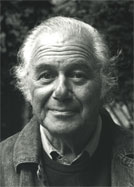 |
Jacob Needleman is an author, editor, and educator. Professor Needleman was educated at the University of Frieburg, Germany, Harvard, and Yale, and has been on the faculty of San Francisco State University since 1962, where he has taught Philosophy and Religion for many years. He was also Director of the Center of the Study of New Religions at the Graduate Theological Union, Berkeley, California. Needleman has also served as a Research Associate at the Rockefeller Institute for Medical Research and was a Research Fellow at Union Theological Seminary. Bill Moyers featured Prof. Needleman on his PBS television series A World of Ideas. Amongst his many other books, traditionalist readers will be familiar with the influential book edited by Needleman, The Sword of Gnosis. |
|
For a listing of articles by, or reviews of Jacob Needleman click here |
|
|
|
|
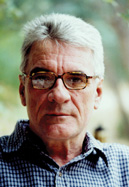 |
Harry Oldmeadow is an Australian author, educator, and editor who writes and teaches on a broad range of subjects. However, Prof. Oldmeadow specializes in traditionalist/perennialist thought, and he is one of the leading writers on that subject today. Oldmeadow is currently the Coordinator of Philosophy and Religious Studies at La Trobe University, Bendigo. Over the last decade he has published extensively in such journals as Sacred Web, Sophia, and Asian Philosophy.
Harry Oldmeadow has written what is, to date, the definitive study in English on the thought of the great Perennialist writer, Frithjof Schuon, titled Frithjof Schuon and the Perennial Philosophy. He has also written an important study of twentieth-century Western encounters with Eastern religions, Journeys East and edited a follow-up book, Light From the East. The World Wisdom title on Swami Abhishiktananda, A Christian Pilgrim in India, was also written by Oldmeadow. Prof. Oldmeadow also edited The Betrayal of Tradition. With such a background, Harry Oldmeadow was selected to edit the new edition of Studies, published in 2010 by World Wisdom as Crossing Religious Frontiers. This collection of new and classic essays is part of World Wisdom's "Studies in Comparative Religion" series, and focuses on the fundamental principles to be considered in interfaith matters. |
|
For a listing of articles by, or reviews of Harry Oldmeadow click here |
| For more information about Harry Oldmeadow at www.worldwisdom.com click here |
| For books by Harry Oldmeadow at www.worldwisdom.com click here |
|
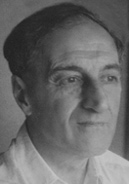 |
Marco Pallis (1895-1990) was born of Greek parents in Liverpool, England, educated at Harrow and Liverpool University, and served in the British army during the World War I. He wrote two books deriving from his experiences traveling in the Eastern Himalaya region and with Tibetan Buddhism: Peaks and Lamas (1939) which was reprinted several times and became something of a bestseller, and The Way and the Mountain (1960). Pallis also wrote many articles for Studies in Comparative Religion, some of which are included in his last publication, A Buddhist Spectrum.
|
|
For a listing of articles by, or reviews of Marco Pallis click here |
| For more information about Marco Pallis at www.worldwisdom.com click here |
|
|
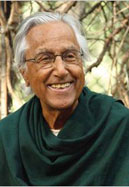 |
Father Raimundo Panikkar (1918-2010) was a Roman Catholic priest and a scholar who specialized in comparative religion and inter-faith dialogue. Rev. Panikkar was born in Barcelona, Spain to a Hindu father and a Catholic mother. He received doctorates in philosophy, science, and theology, and later taught in Rome, at Harvard, and at the University of California. Fr. Raimundo Panikkar was particularly interested in the dialogue between Christianity and Asian religions, especially Hinduism. In addition to several books under his name, he wrote a number of articles, and contributed the essay “Common Patterns of Eastern and Western Scholasticism” to the Summer 1975 issue of Studies in Comparative Religion. |
|
For a listing of articles by, or reviews of Raimundo Panikkar click here |
|
|
|
|
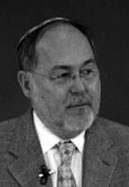 |
T.A. Perry (Theodore Anthony Perry) is a literary scholar, educator, writer, editor, and translator. Perry received his PhD in Romance Philology and Comparative Literature from Yale University. He has taught at Williams College, Smith College, the University of Connecticut, Loyola University, Hebrew University, and Ben Gurion University. He is the author and editor of numerous books and articles, including Wisdom Literature and the Structure of Proverbs, The Honeymoon is Over—Jonah's Argument with God, Erotic Spirituality: The Integrative Tradition from Leone Ebreo to John Donne, The Moral Proverbs of Santob de Carrion: Jewish Wisdom in Christian Spain, and God’s Twilight Zone—Wisdom in the Hebrew Bible. |
|
For a listing of articles by, or reviews of T.A. Perry click here |
|
|
|
Catherine Perry is Associate Professor of French at the University of Notre Dame in America. She is a scholar of French literature. Dr. Perry lived in Morocco for over ten years, and has had an interest in Islamic thought in literature and philosophy. Catherine Perry contributed the essay “Ibn Rushd’s Defense of Philosophy” to the Winter-Spring 1985 (vol. 17, no. 1 & 2) issue of Studies.
|
For a listing of articles by, or reviews of Catherine Perry click here |
|
|
|
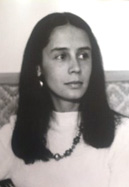 |
Clara Perry married Perennialist author Mark Perry in Switzerland before moving to Bloomington, Indiana in 1980 in order to live close to Frithjof Schuon. Her studies include Journalism and Music in her native Colombia and a Bachelor of Arts degree in French from Indiana University, where she also took Ceramics. Her love of spirituality and different cultures and languages are paramount in her life. Clara Perry contributed the article “Cup of Immortality” to the final issue of Studies (1985 Winter-Spring, vol. 17, no. 1 and 2).
|
|
For a listing of articles by, or reviews of Clara Perry click here |
|
|
|
|
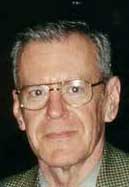 |
Roland Pietsch is a German scholar, writer, translator, and educator who specializes in Islamic philosophy. Dr. Pietsch has taught philosophy, theology and religious studies at universities in Germany, Ukraine, Uzbekistan, and Iran. Most recently, Prof. Pietsch has held the post of Professor of Philosophy and Religious Studies at Ludwig-Maximilians-University of Munich. Dr. Roland Pietch contributed the articles "The Spiritual Vision: Meister Eckhardt, Jacob Boehme and Angelus Silesius", which appeared in the Summer-Autumn 1979 edition of Studies, and "Religious Pluralism and the Transcendent Unity of Religion" to Crossing Religious Frontiers, edited by Harry Oldmeadow.
|
|
For a listing of articles by, or reviews of Roland Pietsch click here |
|
|
|
One piece of writing seems to be attributed to Wilson Eliot Poindexter: A review of Mark Sedgwick's much scrutinized book Against the Modern World. The review was originally published in the tradtionalist journal Sophia in Volume 11, No.1 (Summer, 2005). Although biographical details do not exist for "Wilson," it can be safely assumed from the precision and knowledge of the subject at hand that he or she is a scholar with extensive experience with many of the fields crucial to the legitimacy of Sedgwick's book as a scholarly and thus objective study. |
For a listing of articles by, or reviews of Wilson Eliot Poindexter click here |
|
|
|
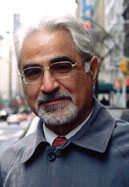 |
Dr. Nasrollah Pourjavady is a prolific Iranian scholar, author, and translator who specializes in Islamic philosophy, Sufi Studies, and Persian Literature. He was the founding director of Iran University Press. Most recently, Professor Nasrollah Pourjavady has been at the Department of Religious Studies at the University of North Carolina at Chapel Hill, and previously held academic positions at the University of Tehran, Colgate University, and the Gregorian University in Rome. In 2005 Professor Nasrollah Pourjavady received the Alexander von Humboldt Award for excellence in
research. He collaborated with Peter Lamborn Wilson on two books, as well as many others authored and edited by him alone. Dr. Pourjavady contributed the article “A Sufi Fable - Shah Da‘i I Shirazi’s 'Tale of the Fish'” to the Spring, 1976 issue of Studies.
|
|
For a listing of articles by, or reviews of Nasrollah Pourjavady click here |
|
|
|
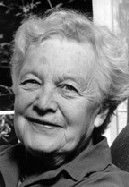 |
Kathleen Raine was an internationally recognized English poet and Blake scholar. She was one of the founders of the Temenos Academy, an organization that advocates the primacy of the Imagination and which promulgates a traditional view of the arts and crafts in Britain. In addition to her many seminal works on the Romantic poet William Blake (such as Blake and Antiquity, 1979; Golgonooza, City of the Imagination: Last Studies in William Blake, 1991; Blake and Tradition, 2002), other of her more representative publications include Defending Ancient Springs (1985) and Yeats the Initiate (1986).
|
|
For a listing of articles by, or reviews of Kathleen Raine click here |
| For more information about Kathleen Raine at www.worldwisdom.com click here |
|
|
Dr. Noble Ross Reat is a scholar, educator, author, editor, and translator who specializes in religious traditions, particularly in Eastern religions. He has worked in the Department of Studies in Religion, University of Queensland, Australia. Besides his contributions to scholarly journals, Dr. N. Ross Reat has written the following books: A Tibetan Mnemonic Grammar: The Divine Tree, (1982); Origins of Indian Psychology, (1990); A World Theology, co-authored with Edmund F. Perry, (1991); and Buddhism: A History (1994). He also edited Volume VII of the Encyclopedia of Indian Philosophies, titled Abhidharma Philosophy. Much of his work has focused on the Buddhist tradition, but his contribution to Studies in Comparative Religion is "The Tree Symbol in Islam." |
For a listing of articles by, or reviews of Noble Ross Reat click here |
|
|
|
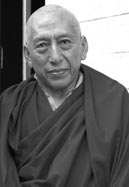 |
Samdhong Rinpoche is the fifth reincarnation of that title in the Tibetan Buddhist tradition. He holds a Doctorate in Buddhist sciences from the University of Drepung in Tibet. In 1959, Rinpoche fled to India along with His Holiness the Dalai Lama. In India he served as a teacher to monks in exile and was appointed director of the Central Institute for Higher Tibetan Studies. On July 29, 2001, Rinpoche was named Kalon Tripa, or Prime Minister of the Tibetan Exile Government, the first political leader to be directly elected by the people in exile.
The 2006 book Samdhong Rinpoche’s Uncompromising Truth for a Compromised World is a series of interviews with Samdhong Rinpoche (along with passages giving historical and religious context) focusing on the struggle for a traditional Tibet and on Tibetan Buddhist perspectives on life, spirituality, and the modern world.
|
|
For a listing of articles by, or reviews of Samdhong Rinpoche click here |
|
| For books by Samdhong Rinpoche at www.worldwisdom.com click here |
|
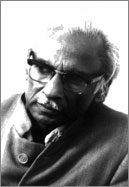 |
Awadh Kishore Saran (1922-2003), who wrote under the name A. K. Saran, was an Indian scholar, editor, and writer and one of the most important voices in the Hindu world on traditional thought. A. K. Saran's writings often covered the expositors of traditional teachings and the perennial philosophy such as Frithjof Schuon, and particularly Ananda K. Coomaraswamy, whose writings Saran first encountered when he was ten. Saran's books include Hinduism in Contemporary India, Illuminations, On the Intellectual Vocation, On the Theories of Secularism and Modernization, Traditional Vision of Man, Traditional Thought, and Sociology of Knowledge and Traditional Thought. Much more biographical information on A.K. Saran can be found on his official web site (click here to go to the web site in a new tab or window).
A.K. Saran wrote two articles that appeared in Studies in Comparative Religion: The Crisis of Hinduism (Spring, 1971), and Gandhi’s Theory of Society and Our Times (Autumn, 1969).
|
|
For a listing of articles by, or reviews of A.K. Saran click here |
|
|
|
|
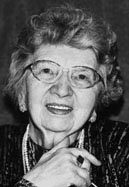 |
Annemarie Schimmel was one of the leading experts on Islamic literature and mysticism (Sufism) in the world. She wrote more than 80 books and essays, and lectured at universities and conferences around the world. Professor Schimmel’s teaching posts included Ankara University, the University of Bonn, and Harvard University. Her writings include translations into English and German from works in Persian, Urdu, Arabic and Turkish, as well as studies of Muslim saints, Sufism, and Islamic literature. Her book Mystical Dimensions of Islam (1975) is considered a classic in its field.
Articles by Annemarie Schimmel comming soon
|
|
For a listing of articles by, or reviews of Annemarie Schimmel click here |
| For more information about Annemarie Schimmel at www.worldwisdom.com click here |
|
|
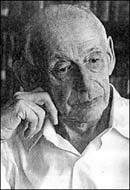 |
Gershom Scholem (December 5, 1897 – February 21, 1982), also known as Gerhard Scholem, was a Jewish philosopher and historian raised in Germany. He is widely regarded as the modern founder of the scholarly study of Kabbalah, becoming the first Professor of Jewish Mysticism at the Hebrew University of Jerusalem.
Scholem is best known for his collection of lectures, Major Trends in Jewish Mysticism (1941) and for his biography Sabbatai Zevi: The Mystical Messiah (1973). His collected speeches and essays, published as On Kabbalah and its Symbolism (1965), helped to spread knowledge of Jewish mysticism among non-Jews.
He was awarded the Israel Prize in 1958 and was elected president of the Israel Academy of Sciences and Humanities in 1968.
|
|
For a listing of articles by, or reviews of Gershom G. Scholem click here |
|
|
|
|
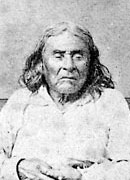 |
Chief Seattle (c. 1780 - 1866) was a Duwamish Indian chief who led the Suquamish and Duwamish Native American tribes in what the west of the United States, in what is now the state of Washington. The city of Seattle is named after him. Although born into the family of a chief, Si'ahl (alternate spellings include "Seatl" and others) gained prominence through acts of leadership and as a warrior, and became a much respected chief.
An address given by Chief Seattle was translated and transcribed and is titled “Message to the Modern World” in the Summer 1976 issue of Studies.
|
|
For a listing of articles by, or reviews of Chief Seattle click here |
|
|
|
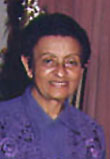 |
Maureen Seneviratne is a Sri Lankan writer of short stories and essays as well as a journalist and activist for social causes. She has written books of stories for both children and adults, informative pieces on the places, religion, and folklore of Sri Lanka, and a biography of former prime minister Sirivamo Bandranaike. Ms. Seneviratne's article “The Cult of Kataragama” appeared in the Spring 1970 issue of Studies.
|
|
For a listing of articles by, or reviews of Maureen Seneviratne click here |
|
|
|
|
|
Abu Bakr Siraj ad-Din was the traditional name of Dr. Martin Lings.
Martin Lings was an author, editor, translator, and specialist in Islamic art and esoterism. From 1970-74 he was Keeper of Oriental Manuscripts and Printed Books at the British Museum (in 1973 his Department became part of the British Library) where he had been in special charge of the Qur’an manuscripts, amongst other treasures, since 1955. His authoritative biography of the Prophet Muhammad, Muhammad: His Life Based on the Earliest Sources, has become a classic and is widely read in both East and West as an unbiased, clear, and profound source on the prophet of Islam.
|
|
For a listing of articles by, or reviews of Abu Bakr Siraj ad-Din click here |
|
|
|
Lilian Staveley (c. 1878-1928) was an Englishwoman of the late Victorian era who led the life of a seemingly “ordinary soul” of the time. It was only after her death that her husband, Brigadier General John Staveley, and others, learned that she had anonymously published three books. These books (The Prodigal Returns, The Romance of the Soul, and The Golden Fountain) contained autobiographical passages of a soul’s mystic and private journey back to God, and insights and advice accessible to all readers seeking more knowledge of how to deepen our individual relationships with the Divine. |
For a listing of articles by, or reviews of Lilian Staveley click here |
|
|
|
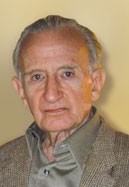 |
William Stoddart is a perennialist author, translator, and editor. For many years he was assistant editor of this journal Studies in Comparative Religion. He spent most of his working life in London, England, and retired to Windsor, Ontario, in 1982.
He has made a life-long study of the great religious traditions of the world, and in this connection has traveled widely: in Europe, North Africa, Turkey, India, and Ceylon. His books include: Sufism: the Mystical Doctrines and Methods of Islam (1976; editions in seven languages), Outline of Hinduism (1993), and Outline of Buddhism (1998). Dr. Stoddart is perhaps the foremost authority on the writings of the eminent perennialist writer Titus Burckhardt.
|
|
For a listing of articles by, or reviews of William Stoddart click here |
| For more information about William Stoddart at www.worldwisdom.com click here |
|
|
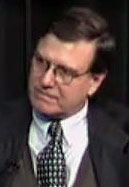 |
Harold Talbott is a scholar of Buddhism. He is the co-founder of the Buddhayana Foundation, and writes and researches in the field of Tibetan Buddhism. Mr. Talbott also edits the writings of the Venerable Tulku Thondup. Talbott was a friend and student of Dom Aelred Graham, and collaborated with Thomas Merton, helping the latter gain a deeper understanding of Buddhism. Harold Talbott spent time in the East studying Buddhism, including with the Dalai Lama himself.
Harold Talbott contributed “The Round of Existence” to the Winter 1971 issue of Studies.
|
|
For a listing of articles by, or reviews of Harold Talbott click here |
|
|
|
Michel Valsan (d. 1974) was a Rumanian diplomat who became an important scholar, translator, and essayist, particularly on Islamic esoterism. Vâlsan lived in Paris for many years, and was closely associated with Frithjof Schuon but especially with René Guénon.
Mr. Valsan edited the main French traditionalist journal of the day, Études traditionnelles, for a number of years, and frequently contributed to its pages. He was also quite influential among a group of younger traditionalists in France. Vâlsan specialized in translating and interpreting the works of the great Sufi theoretician Ibn Arabi. |
For a listing of articles by, or reviews of Michel Vâlsan click here |
|
|
|
|
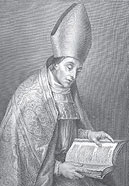 |
Born Tomás García Martínez in 1488, he was later called by the place name Villanueva, where he grew up and was educated. Thomas of Villanova (the anglisized version) studied Arts and Theology and became a professor, but he decided to enter the priesthood, and so was ordained as an Augustinian in 1518. Thomas of Villanova continued his academic pursuits and held various academic positions at the university level. He was known for his austere but charitable nature, and began to experience mystical ecstacies. He had a great devotion to the Virgin Mary. For a while, Thomas of Villanova refused higher church offices, but finally accepted the position of Archbishop of Valenci in 1544. He wrote various tracts, but his sermons, which were later published, became quite well known for their power, simplicity, and beauty. Thomas of Villanova died in 1555. He was canonized in 1658. The liturgical feast day of St. Thomas of Villanova is celebrated on September 22.
St. Thomas of Villanova's “Sermon for the Feast of the Circumcision on the Divine Name” appeared in the Autumn 1975 issue of Studies.
|
|
For a listing of articles by, or reviews of Thomas of Villanova click here |
|
|
|
Bernard Wall (1908-1974) was an English author, publisher, and translator. He was educated at the English Jesuit College, Stonyhurst, at Oxford University and at Fribourg University in Switzerland. Wall was very active in the Catholic intellectual movement for many years along with his wife Barbara, a novelist writing under her maiden name, Barbara Lucas. Bernard Wall founded the publications Colosseum and Changing World, and he wrote a regular column in The Catholic Herald. His books include Spain of the Spaniards (1937), European Notebook (1939), These Changing Years (1947) and his autobiography, Headlong into Change (1969). |
For a listing of articles by, or reviews of Bernard Wall click here |
|
|
|
|
R.C. Zaehner (1913 - 1974) was a British author and academic specializing in Eastern religions. He first was recognized for his studies of Zoroastrianism, but he then turned to work on comparative religion and mysticism. His expertise in oriental languages led to intelligence service work during World War II, and Zaehner later worked for periods of time in Malta and Tehran. After returning to Britain, he was appointed to the Spalding Professorship of Eastern Religions and Ethics at Oxford. Professor Zaehner gave the Gifford Lectures during the years 1967-1969. These lectures have been described as presenting "a grand historical overview of how the different religions have provided a mutuality of nourishment, and also have interpenetrated each other's beliefs." |
For a listing of articles by, or reviews of Robert Zaehner click here |
|
|
|
|
|
|